Your Groove Is Good: Why Your DAW's Grid Is Quietly Killing the Feel of Your Recordings
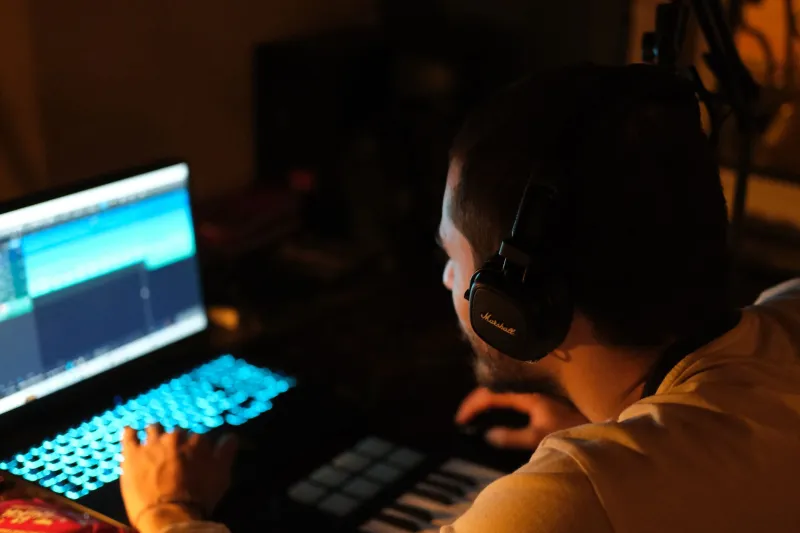
There's a conversation that happens in home studios across the UK every single day. A guitarist lays down a rhythm part, listens back, thinks it sounds a bit loose, and hits quantize. A drummer records a tight fill, winces at a slightly early snare hit, and drags it onto the grid. A bassist decides their whole take could do with tidying up, selects all, and clicks.
And just like that, the life drains out of the recording.
The problem isn't your playing. The problem is that your DAW has convinced you your playing is the problem.
What the Grid Actually Does to a Performance
Quantization is genuinely useful. Nobody is arguing otherwise. For electronic music, tight hip-hop, or anything where mechanical precision is part of the aesthetic, snapping notes to a grid is a legitimate creative tool. But it was never meant to be the default response to every human performance.
When you play music, you breathe. You lean into a beat, pull back slightly on the next, push a little harder on the chorus. These micro-variations — we're talking milliseconds here — are what give a performance its character. They're what make a listener's foot tap. They're the difference between a track that sounds like it was performed and one that sounds like it was assembled.
Your DAW doesn't know any of this. It sees deviation from the grid as error. Left to its defaults, it will correct that error enthusiastically and without mercy.
The British Pocket: A Tradition Worth Protecting
If you want a masterclass in why human timing matters, dig into the catalogue of classic British recordings. Listen to the rhythm section on early Rolling Stones records — Charlie Watts played with a slight behind-the-beat looseness that gave those tracks a swagger no click track could manufacture. Listen to the groove on classic Madness recordings, or the way Radiohead's rhythm section breathes around Thom Yorke's vocals. None of it is sloppy. All of it is intentional, or at least instinctive.
The legendary British session players who built careers in studios across London during the sixties and seventies understood something that a lot of modern home producers have forgotten: being in the pocket isn't the same as being on the grid. The pocket is about feel, about the relationship between instruments, about the space between the beats. You can be perfectly on the grid and still sound like you're playing in a car park.
How to Tell If You Actually Need to Quantize
Here's a simple test. Record a performance. Listen back without looking at the waveform. Does it feel good? Does it make you want to move? If yes, leave it alone. If you only notice timing issues when you zoom into the timeline and compare notes to grid lines, those issues are almost certainly inaudible to anyone listening to your music.
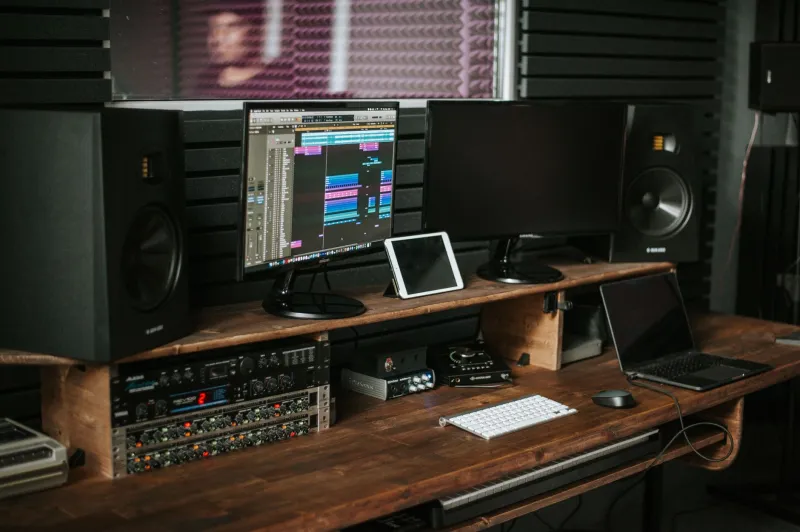
The visual representation of audio in a DAW is one of the sneakiest traps in modern recording. Our brains are wired to respond to visual information, and when we see a note sitting slightly off a gridline, we interpret that as a mistake — even when our ears haven't registered a problem. Trust your ears, not your eyes.
If you genuinely hear a timing issue — a note that disrupts the flow, a hit that lands in the wrong place — then by all means, fix it. But fix it surgically. Move the one note. Don't select all and quantize the whole take.
Practical Approaches: Working With Your Timing, Not Against It
Most DAWs offer more nuanced quantization options than the blunt-force default, and it's worth spending half an hour getting to know them.
Groove quantize is one of the most underused features in modern production. Rather than snapping everything to a rigid grid, groove quantize pulls your performance toward a feel extracted from another source — a sampled drum loop, a MIDI pattern, or even a previous take. The result preserves the natural variation in your playing while tightening the relationship between elements.
Quantize strength lets you apply partial quantization, nudging notes toward the grid rather than locking them in place. Setting this to 50–70% often gives you the best of both worlds: a performance that sounds tight on first listen but still breathes when you pay attention.
Elastic Audio and similar time-stretching tools can be used to tighten specific moments without affecting the overall feel. A single dragged beat can be nudged back into place without touching anything around it.
And sometimes — often, actually — the right answer is to re-record rather than correct. If a take feels loose, it might just need another run. A performance recorded with confidence and intention will almost always beat a technically corrected one.
When the Grid Is Your Friend
None of this is an argument against quantization. There are absolutely situations where tight, grid-locked timing is exactly what a track needs. Electronic music, dance music, anything built around a programmed drum pattern — these benefit from precision. The problem isn't the tool. It's the assumption that the tool should always be applied.
The key question to ask yourself is: what does this track need? If the answer is feel and energy, protect your human timing at all costs. If the answer is mechanical tightness, go ahead and quantize. But make it a conscious decision, not a reflex.
Start Trusting Yourself
The best thing you can do for your recordings right now is turn off auto-quantize if it's switched on by default in your DAW, and start listening to your takes before you reach for the correction tools. Give yourself a moment to hear what you actually played.
You might be surprised. A lot of the time, what your DAW is telling you is a mistake is actually what makes your recording sound like a recording — like something a human made, with intention and feel and imperfection baked right in.
That's not a bug. That's the whole point.