Ditch the Click: How British Artists Are Finding Rhythm in the Silence
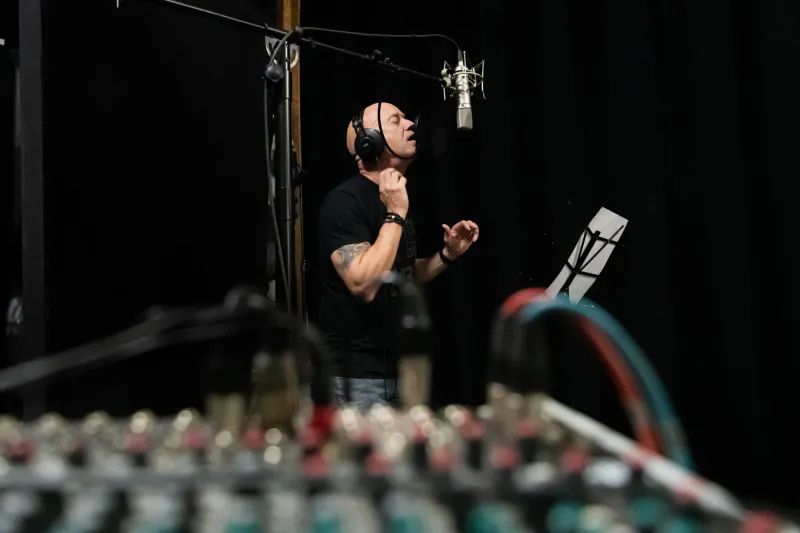
There's a moment in almost every recording session where someone says it. Usually under their breath, sometimes out loud. Can we just turn the click off?
For decades, that request has been met with a wince from the producer and a polite but firm "no." The metronome was gospel. The grid was sacred. And anything that drifted even slightly from the BPM felt like a problem to be corrected rather than a feeling to be preserved.
But something's shifting. Across UK studios — from converted lofts in Manchester to purpose-built rooms in South London — a growing number of artists and producers are pushing back against the tyranny of the click. Not out of laziness or technical ignorance, but because they've heard what happens when you take it away. And what they're hearing is extraordinary.
Why the Click Became King (And Why That's Now the Problem)
The rise of the click track wasn't arbitrary. When multitrack recording became standard practice, you needed a shared reference point. When DAWs arrived and editing became surgical, a locked grid made everything easier — comping vocals, quantising drums, aligning overdubs. The click track was infrastructure.
But infrastructure has a cost. Ask any experienced session drummer in the UK and they'll tell you: playing to a click changes how you play. Not just technically — psychologically. There's a constant, low-level anxiety that comes with knowing every micro-deviation will be visible on a waveform. That anxiety lives in the performance. Listeners might not be able to name it, but they feel it.
Producers like Youth (Killing Joke, The Verve, Paul McCartney) and Flood (Nick Cave, PJ Harvey, Depeche Mode) have spoken in interviews about the importance of feel over metronomic precision. The best British records — from Parklife to Whatever People Say I Am — breathe in ways that a locked grid simply doesn't allow.
What Are Artists Using Instead?
This is where it gets genuinely interesting, because "no click" doesn't mean "no reference." The musicians leading this shift aren't flying blind — they're just using different anchors.
Ambient Drones and Tonal Reference Points
One approach gaining traction in UK studios is the ambient drone — a sustained tonal pad or bass note that gives musicians a harmonic and textural centre without imposing a rhythmic pulse. The drone creates atmosphere and locks in the key, but leaves the tempo entirely in the hands of the players.
This works especially well for folk, ambient, and singer-songwriter material. If you're recording acoustic guitar and vocals, try generating a simple drone in your DAW — a held note on a soft synth or even a bowed string sample — and record to that instead of a click. You'll notice immediately how differently you play.
Conductor-Style Visual Cues
Some producers working with live bands in the room have returned to something almost old-fashioned: physical cues. A hand gesture at the start of a take, a nod to signal a chorus, a raised eyebrow before a key change. It sounds theatrical, but it works because it keeps musicians focused on each other rather than on a blinking cursor.
In home studio terms, this translates surprisingly well to remote sessions too. If you're recording a vocalist or instrumentalist over video call, conducting the feel of a section — rather than setting a BPM and hitting record — can produce results that feel genuinely collaborative.
Loose Loops and Feel-Based Guides
Another technique involves recording a rough, feel-based guide track first — just a guitarist or pianist playing the song the way it naturally wants to go — and then using that as the reference for all subsequent overdubs. No click, no grid. Just the original performance as a foundation.
The key is committing to that first take. If it speeds up in the chorus, everything else speeds up with it. If the bridge breathes and slows slightly, that becomes part of the song's identity rather than a mistake to fix.
Keeping It Tight Without Keeping It Rigid
Here's the concern that always comes up: won't it just fall apart?
Not if you approach it intelligently. The goal isn't chaos — it's controlled feel. There are a few practical ways to maintain timing integrity without a metronome.
Pre-session rehearsal matters enormously. If a band knows a song inside out before they hit record, the tempo tends to stay surprisingly stable even without a click. The click often becomes a crutch for under-rehearsed material. Strip it away and you quickly find out which songs are actually ready to record.
Record longer takes. When you're not locked to a grid, short punched-in takes become trickier to manage. Lean into full run-throughs instead. You'll often get more energy and fewer edit points anyway.
Use tempo mapping after the fact. Modern DAWs — Logic, Ableton, Pro Tools — all have tempo detection tools that can map the grid to a free performance rather than forcing the performance to fit the grid. Record without a click, then let the software follow you. This preserves feel while still giving you edit flexibility.
Trust your ears over your eyes. When you're not working to a grid, stop watching the waveforms so closely. Close your eyes and listen. Does it feel right? That's the only question that matters.
A Practical Experiment for Your Next Session
If you've never recorded without a click before, don't scrap it entirely on a project that matters. Instead, try this: take a song you know well and record one complete run-through with no metronome at all. Don't edit it. Just listen back.
Nine times out of ten, you'll hear something in that take — a liveness, a risk, a sense that something real is happening — that your click-locked recordings don't have. It might not be perfect. But it'll be honest.
That's what British recording has always done best, frankly. From the rawness of early punk recordings at Pathway Studios in Islington to the loose, swampy grooves of trip-hop coming out of Bristol in the nineties — the records that defined UK music weren't defined by their metronomic precision. They were defined by feel.
The Click Isn't the Enemy — But It Might Be a Habit
None of this is an argument for abandoning the click entirely and forever. There are plenty of genres — electronic music, heavily produced pop, anything with programmed drums — where a locked grid is essential. The click has its place.
But if you're using it by default, every session, without questioning whether it's actually serving the music, it might be worth asking yourself why. Is it because the song needs it? Or is it because you've never tried anything else?
The metronome is a tool. Like any tool, it should be picked up when it's useful and put down when it isn't. The most interesting thing happening in UK studios right now isn't a new piece of gear or a novel plugin. It's producers and musicians simply asking: what happens if we just play?
Go find out.