Finish Line to First Listen: Getting Your UK Recording from Master to Streaming Platform

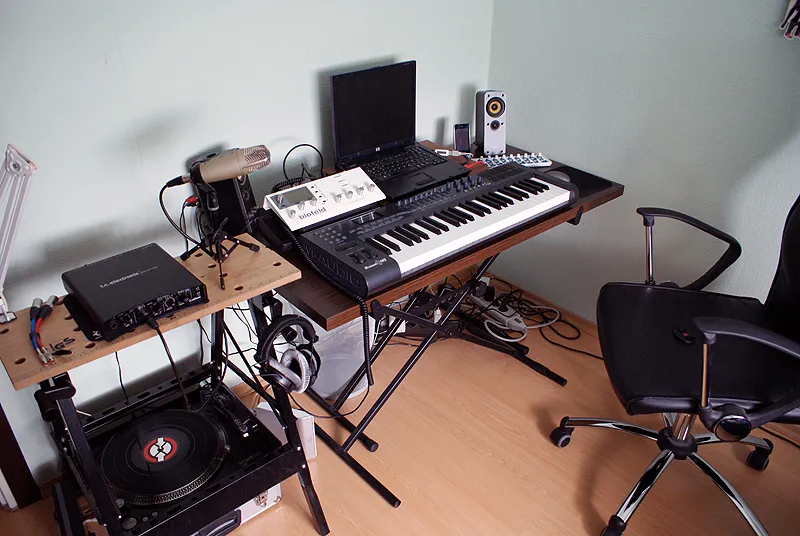
Photo: 玄史生, CC0, via Wikimedia Commons
There's a particular kind of relief that comes when you finally decide a recording is done. You've tracked, edited, mixed, and agonised — and now it's finished. Job done, right?
Not quite. For independent UK musicians, the journey from a completed recording to a track that's actually live on Spotify, properly registered with the right organisations, and earning you royalties is a multi-step process that trips up a lot of people who've never navigated it before. This guide walks you through it, in the order it actually needs to happen.
Step One: Get Your Mix Properly Mastered
Mastering is the final stage of audio processing before distribution. It optimises your track for playback across different systems and brings it up to commercial loudness levels — but done well, it's much more nuanced than just slapping a limiter on and cranking the gain.
For UK artists, there are some excellent independent mastering engineers worth looking into. Studios like Metropolis in London have worked on major releases for decades. But you don't need to spend Metropolis money if your budget doesn't stretch that far. Skilled independent engineers operating out of home studios across the UK — many of whom advertise through community forums and social media — can do excellent work for anywhere between £30 and £150 per track.
Online mastering services like LANDR and eMastered offer algorithmic mastering at a lower price point, and while they're not a replacement for a skilled human engineer, they're a reasonable option if budget is genuinely tight and your mix is already solid.
Whatever route you choose, ask for your masters at 24-bit WAV. Most streaming platforms now accept high-resolution files, and having proper lossless masters in your archive is simply good practice.
Step Two: Sort Your ISRC Codes
An ISRC — International Standard Recording Code — is a unique identifier assigned to each individual recording. Think of it like a barcode for your track. Streaming platforms, collecting societies, and royalty systems use ISRCs to track plays and attribute payments correctly. Without one, your recording essentially doesn't exist in the digital rights ecosystem.
In the UK, ISRCs are issued through PPL (Phonographic Performance Limited). If you're releasing independently, you can register as a self-releasing artist and obtain your own ISRC prefix, after which you generate individual codes for each track yourself. Most digital distribution services — DistroKid, TuneCore, Amuse, and others — will also assign ISRCs automatically when you upload, though it's worth understanding what's happening rather than just letting the platform handle it invisibly.
Keep a record of every ISRC you assign. You'll need them when registering with collecting societies.
Step Three: Register with PRS for Music
If you write your own songs, you need to be a member of PRS for Music. Full stop.
PRS (the Performing Right Society) collects royalties on behalf of songwriters and publishers whenever music is performed publicly — whether that's on the radio, streamed online, played in a café, or performed live. They have reciprocal agreements with collecting societies in other countries, which means they also collect international royalties on your behalf.
Joining PRS is free for the basic membership tier. Once you're a member, you register your songs — including the split of ownership if you co-wrote anything — and PRS does the rest. Payments aren't instant; there's typically a lag of several months between when plays happen and when royalties are paid out. But they do accumulate, and for any artist releasing music regularly, membership is non-negotiable.
A separate but related organisation is MCPS (Mechanical Copyright Protection Society), which also operates under the PRS for Music umbrella and handles mechanical royalties — the fees paid when your music is reproduced (including on streaming platforms). Registering your works with PRS covers both.
Step Four: Register with PPL
Where PRS covers songwriting royalties, PPL handles recording royalties — the money owed to whoever owns the master recording. If you recorded, produced, and own your own masters (as most independent artists do), you're entitled to register those recordings and collect PPL royalties whenever they're played on UK radio, in public venues, or streamed.
PPL membership is also free. You'll need your ISRC codes when registering recordings, which is another reason to have them sorted before you reach this stage.
It's worth being clear on the distinction: PRS pays you as a songwriter, PPL pays you as a recording owner. If you're both, you should be registered with both.
Step Five: Choose Your Distribution Route
To get your music onto Spotify, Apple Music, Amazon Music, Tidal, and the rest, you need a digital distributor. In the UK, the most commonly used independent options are DistroKid, TuneCore, Amuse, and CD Baby — each with slightly different pricing models and features.
DistroKid charges an annual fee and takes no cut of your royalties, making it popular with artists releasing frequently. TuneCore works on a per-release model. Amuse offers a free tier with a paid option for faster processing and additional features. CD Baby charges a one-off fee per release and takes a small percentage.
Before uploading, make sure you have the following ready: your mastered WAV files, artwork at 3000x3000 pixels (RGB, JPEG or PNG), your ISRC codes, metadata including track titles, featured artists, composers, and release date.
Metadata is worth taking seriously. Errors in credits or spelling at this stage can cause royalty attribution problems that are genuinely painful to unpick later.
Step Six: Set a Release Date and Plan Around It
Most distribution services recommend submitting at least two to three weeks before your intended release date — longer if you want a chance of being considered for editorial playlist pitching on Spotify, which requires submission through Spotify for Artists at least seven days before release.
Use the lead time well. Get your Spotify for Artists and Apple Music for Artists profiles claimed and set up. Upload your release to SubmitHub or reach out to UK music blogs and playlist curators. If you've got a PR budget, even a modest one, this is the moment to deploy it.
A Note on Sync and Licensing
If you're interested in getting your music placed in TV, film, advertising, or games — a genuinely viable income stream for UK composers and producers — you'll want to make sure your publishing is properly set up and your tracks are registered. Organisations like the MPA (Music Publishers Association) and platforms like Musicbed and Artlist can be relevant here, though that's a whole separate rabbit hole worth exploring once your fundamentals are in place.
The Admin Is Part of the Craft
None of this is glamorous. It's not the reason you started making music. But understanding the infrastructure behind releasing music independently is genuinely empowering — and every step you get right means more of the money your music earns actually reaches you.
Take it one stage at a time, keep your records organised, and treat the business side of releasing music with the same care you'd give the creative side. Your future self — the one receiving a PPL cheque for a track that's been playing on regional radio — will thank you for it.