Picking Your First Proper Mic: A No-Nonsense Guide for UK Home Recordists
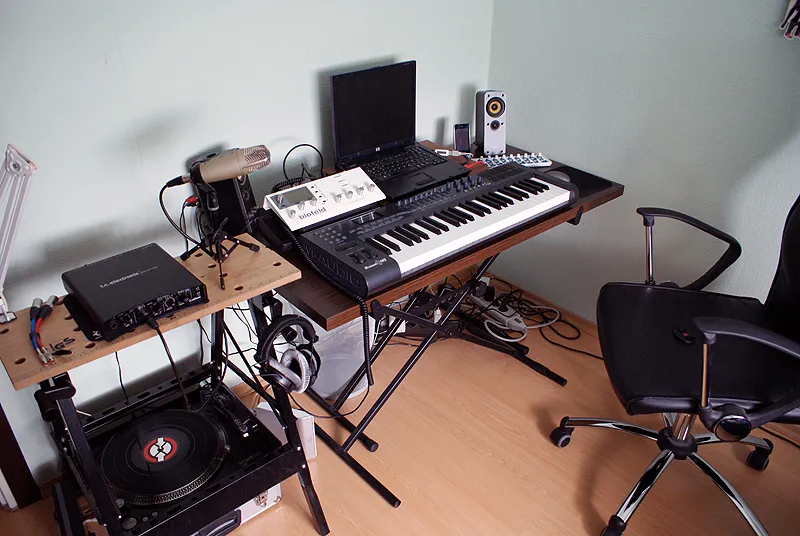
Photo: LiquidMolly, CC BY-SA 2.0, via Wikimedia Commons
Walk into any online gear forum and ask which microphone you should buy. Go on, do it. Within about four minutes you'll have seventeen conflicting opinions, three arguments about vintage gear you can't afford, and at least one bloke insisting you need to spend £800 minimum or you're "not serious."
Here's the truth: the right microphone for you depends almost entirely on what you're recording, where you're recording it, and how much you're realistically willing to spend. That's it. No mystery. No magic. Just matching the tool to the task.
So let's break down the three main microphone types, talk about real-world UK use cases, and figure out where your money is actually best spent.
Condenser Mics: Sensitive, Detailed, and a Bit Demanding
Condenser microphones are the go-to choice for most home studio vocal work, and for good reason. They pick up detail beautifully — the breath before a phrase, the subtle movement in a fingerpicked acoustic guitar, the crisp consonants in a voiceover. That sensitivity is their superpower.
It's also their weakness.
Because condensers are so sensitive, they'll pick up everything. Your neighbour's TV. The boiler clicking on. Traffic from the A-road outside. If your recording space isn't reasonably treated and quiet, a condenser mic will expose every flaw in your room.
For UK home recordists working in a treated spare bedroom or a converted loft with some acoustic panels on the walls, a condenser is often the right first move for vocals and acoustic instruments. The Audio-Technica AT2020 sits around the £80–£100 mark and remains one of the most reliable starter condensers available. Step up to the Rode NT1 (around £160–£180 new) and you get a notably quieter self-noise — ideal if you're doing voiceover work or podcast narration where background hiss really matters.
For those with a bit more to spend, the sE Electronics sE4400a or anything from the Lewitt LCT range offers a genuine step up in character and versatility without heading into the four-figure territory that pro studios occupy.
Best for: Vocals, acoustic guitar, voiceover, podcasting (in a treated space), overhead drum recording.
Requires: 48V phantom power from your audio interface. Every modern interface provides this, so it's not a barrier — just worth knowing.
Dynamic Mics: Tough, Forgiving, and Criminally Underrated
If condensers are the sensitive artists of the microphone world, dynamics are the reliable grafters. They handle high sound pressure levels without flinching, they're far less bothered by untreated rooms, and they tend to be more robust in day-to-day use.
The Shure SM58 and SM7B are the obvious names here. The SM58 (around £90) has been recording live vocals and studio demos for decades, and it still holds up. The SM7B (around £350–£400) has become almost synonymous with podcasting and broadcast-style vocal recording — its built-in pop filter and smooth, flattering response make it genuinely excellent for spoken word and certain vocal styles.
For guitar amp recording, the Shure SM57 is the industry standard for a reason. At roughly £90, it's almost certainly sitting in front of a guitar amp somewhere in the country at this exact moment. It's close-miked, punchy, and handles loud sources with ease.
Less treated room? Loud environment? Recording a raucous acoustic session with mates in a kitchen? A dynamic mic will serve you far better than a condenser in those conditions.
Best for: Guitar amps, snare drums, loud vocals, podcasting, home setups without acoustic treatment.
Requires: No phantom power — just plug in and go.
Ribbon Mics: Vintage Character, Handle With Care
Ribbon microphones occupy a slightly different space. They produce a warm, smooth, often described as "vintage" sound that works beautifully on brass, strings, room ambience, and certain guitar tones. They've had a proper resurgence in recent years, partly because affordable options have improved dramatically.
The sE Electronics X1 R (around £130) and the Rode NTR (around £350) are solid starting points if ribbon character appeals to you. Be aware though — classic ribbon mics can be fragile. Phantom power from your interface should never be applied to a passive ribbon mic unless it's explicitly designed for it. Modern active ribbons are safer, but it's worth reading the manual before you plug anything in.
For most home recordists buying their first mic, a ribbon probably isn't the first purchase. But as a second or third mic to add character and tonal variety? Absolutely worth considering.
Best for: Brass, strings, room mics, guitar cabs (particularly for a warmer tone), vintage-style vocal recording.
When to Invest and When to Save
Here's the honest take: spending more doesn't always mean sounding better. A well-placed £100 dynamic mic in a decent acoustic space will outperform a £500 condenser in an untreated box room every single time.
Save money on your first mic if your room isn't treated yet. Invest in acoustic treatment first — panels, a reflection filter, or even some heavy curtains and bookshelves — and then revisit your mic budget once the environment is sorted.
Invest more when you've outgrown your current mic's limitations and you know specifically what you're missing. "I want more air in the top end" or "the self-noise is bothering me on quiet vocal takes" are legitimate reasons to upgrade. "Everyone on Reddit said this mic is better" is not.
A Quick UK Buying Note
For UK purchases, Gear4music, Thomann (with their UK warehouse), Andertons, and Sweetwater (which ships to the UK) are all reliable options. Keep an eye on the Gear4music used section and eBay's verified seller listings for solid second-hand deals — mics hold their value well and a used AT2020 or SM58 is still a capable workhorse.
VAT is already included in UK list prices, so the price you see is the price you pay. No nasty surprises at checkout.
The Bottom Line
There is no single best microphone. There's only the right microphone for your specific situation. A condenser in a treated room for detailed vocals. A dynamic when your space is less than ideal or you're close-miking loud sources. A ribbon when you want warmth and character and you're ready to handle it with a bit of care.
Start with one mic that fits your primary use case, learn it properly, and resist the urge to upgrade until you genuinely understand its limitations. That discipline — boring as it sounds — is what separates people who make music from people who just collect gear.