When Your Room Eats Your Recording: How Reflections Are Squashing the Life Out of Your Performances
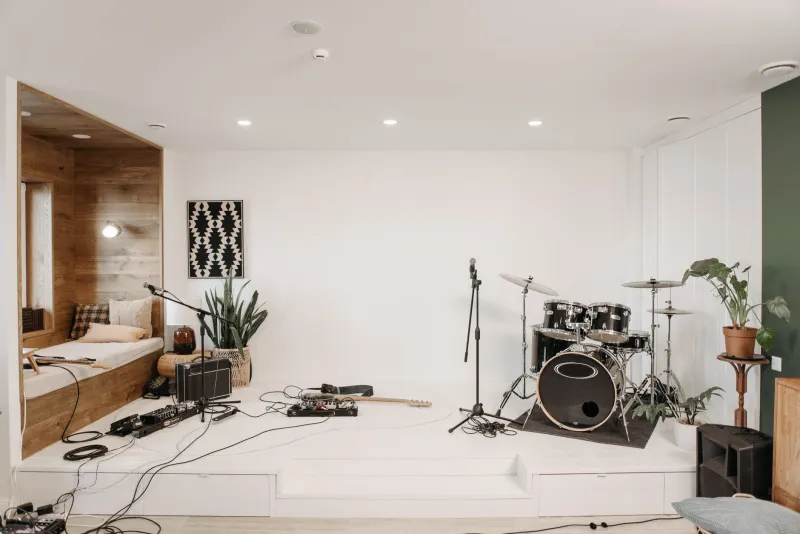
You've done everything right. You've got a decent interface, a respectable microphone, and you've spent a good chunk of a Saturday afternoon getting your gain staging sorted. But when you play back the recording, something's off. The performance was there — you heard it with your own ears — but what came back through the speakers sounds weirdly flat. Compressed, almost. Like someone turned down the excitement dial.
Before you start eyeing up a new preamp or convincing yourself it's your microphone's fault, stop. The problem is almost certainly your room. More specifically, it's what your room is doing to sound after it leaves the source and before it hits your microphone capsule.
What Reflections Are Actually Doing to Your Sound
Here's the bit most guides skip over. When we talk about room reflections causing problems, the conversation usually goes straight to muddiness — that washy, undefined low-mid buildup that makes everything sound like it was recorded in a tiled bathroom. And yes, that's real. But there's a subtler, arguably more damaging effect that doesn't get nearly enough attention: dynamic squashing.
Sound travels outward from a source in all directions. In an untreated room, those waves bounce off walls, ceilings, floors, and flat surfaces, then arrive back at the microphone slightly delayed. The delay depends on how far the reflection has travelled — sometimes just a few milliseconds. At certain frequencies, these delayed copies arrive out of phase with the original signal. When an out-of-phase version of a sound combines with the original, the two partially cancel each other out.
Now here's the problem with dynamics. A loud transient — the initial crack of a snare, the attack of a picked guitar string, the consonants in a vocal — carries more energy at certain frequencies than the sustained body of the note. When reflections cancel those frequencies selectively, they knock the peaks down more than the quieter moments. The result? Your recording sounds like it's been gently compressed by something you never switched on. The transients lose their punch. The quiet passages and loud passages start to sound more similar than they should. The performance sounds lifeless because the dynamic contrast that made it feel like a performance has been quietly stolen.
Why Corners Are the Main Offenders
Low frequencies are long. A 100Hz wave is roughly 3.4 metres from peak to trough. In a typical UK spare bedroom — let's say 3.5 metres by 4 metres — those waves have nowhere sensible to go. They pile up in corners, where two or three surfaces meet, bouncing back and forth between parallel walls and creating what are called standing waves or room modes.
Standing waves don't just add low-end mud. Because they represent frequencies that are effectively stuck in a loop, they sustain far longer than the original sound. A bass note played in the room might ring on for a beat or two after the string has stopped vibrating. That sustained energy then bleeds into your microphone, smearing transients and making everything sound sluggish. The dynamic shape of a note — its attack, sustain, and decay — gets distorted before it ever reaches your recording chain.
Finding the Problem Without Specialist Equipment
You don't need an acoustic measurement rig to get a rough sense of where your room is misbehaving. Start with the clap test. Stand in different positions around your room and clap sharply once. Listen for a metallic, fluttery echo — sometimes called flutter echo — which is a tell-tale sign of parallel reflective surfaces doing exactly what they shouldn't. A boxy, hollow ring after the clap suggests low-frequency buildup.
For a more systematic approach, grab a free room analysis app — Room EQ Wizard is available for free and runs on a standard laptop with a cheap measurement microphone. It's not the easiest piece of software to get your head around at first, but there are plenty of straightforward walkthroughs online, and even a basic frequency response graph will show you which frequencies your room is boosting or cutting before you've touched a single plugin.
You can also simply move your microphone. If your vocal recordings sound dull in one position but slightly more open a foot to the left, that's your room talking. Use it as information.
Treatment Strategies That Don't Require Planning Permission
Here's the good news: you don't need to line every surface in thick acoustic foam to make a meaningful difference. In fact, covering your room entirely in thin foam is one of the most common — and counterproductive — mistakes UK home recordists make. Thin foam only absorbs high frequencies. You end up with a room that's lost its brightness but still has all the low-end problems, which makes everything sound even deader than before.
For dynamics specifically, you want to target the corners and the first reflection points.
Bass traps in the corners. Floor-to-ceiling corner treatment with thick rockwool or purpose-built bass trap panels is the single most impactful thing you can do for a home recording space. You're targeting those standing waves directly. Even partially filling the corners — say, with 100mm thick panels — will make a noticeable difference to how cleanly low-frequency transients are captured.
Absorption at first reflection points. The first reflection point is where sound from your source bounces off the nearest wall before reaching your microphone. For a vocal setup, stand at the mic position and have someone hold a mirror against the side wall, moving it until you can see the microphone in the reflection — that's your first reflection point. A panel of medium-density acoustic absorption there will reduce the out-of-phase arrivals that are flattening your transients.
Diffusion behind the recording position. Rather than absorbing everything, scattering reflections with diffusion panels behind the performer adds a sense of space without the dead, airless quality that over-absorption creates. Bookshelves packed with irregularly sized books are a surprisingly effective and cheap form of diffusion — very much in keeping with the British tradition of making do.
The Difference You'll Actually Hear
Once you've addressed even the worst offending areas of your room, go back and record the same performance again. What you're listening for isn't just clarity — it's contrast. The loud moments should feel genuinely louder relative to the quiet ones. Vocal consonants should snap. A strummed acoustic guitar chord should have a discernible attack before the body of the sound fills in. That's dynamic range, and it's what makes a recording feel like it was performed by a human being rather than assembled from samples.
No compressor in your plugin folder will fix what the room has already squashed. The time to preserve your dynamics is before the signal ever reaches your interface. Sort the room first, and everything downstream — your mixing, your compression decisions, your final master — becomes easier, more honest, and more musical.
Your performances deserve to be heard as they actually happened. Don't let the room get in the way.