Too Close to Hear It Clearly: How Studio Familiarity Is Sabotaging Your Mix
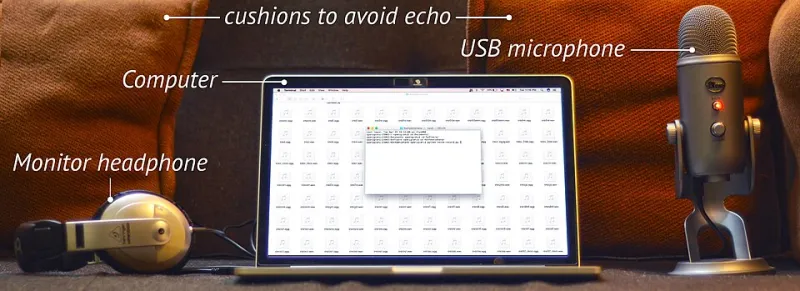
Photo: Subhashish Panigrahi, CC BY-SA 4.0, via Wikimedia Commons
There's a peculiar trap that catches almost every home producer at some point. You've been working on a track for hours. Everything sounds balanced, the low end feels solid, the vocals sit nicely in the mix. You export, stick your headphones on, walk into the kitchen — and suddenly it sounds thin, harsh, and oddly hollow. What just happened?
Nothing changed in the file. The problem was never really in the recording. It was in you.
Your Brain Is Filling in the Gaps
Human hearing is remarkably adaptive. Spend enough time in any acoustic environment and your auditory system begins to compensate for its quirks — mentally subtracting the room's resonances, boosting frequencies that feel underrepresented, and generally papering over the cracks. It's the same reason you stop noticing the hum of a fridge within minutes of walking into a kitchen.
In a home studio, this adaptation works against you. Your room has its own acoustic fingerprint — standing waves in the low-mids, perhaps a flutter echo near the back wall, a slight buildup around 200–300Hz that's baked into almost every semi-treated spare bedroom in Britain. After a couple of hours of mixing, your brain has learned to ignore all of it. You're no longer hearing your mix objectively. You're hearing a mentally corrected version of it.
This is sometimes called acoustic familiarity bias, and it's one of the most underacknowledged problems in home recording education.
Ear Fatigue Is Real, and It Sneaks Up on You
Layered on top of acoustic familiarity is plain old ear fatigue. Your ears aren't tireless instruments — the hair cells in your cochlea genuinely get worn down by sustained exposure to sound, particularly in the mid and high frequencies. The result is a gradual dulling of detail perception that makes your mix sound smoother and more forgiving than it actually is.
The tricky part is that ear fatigue doesn't announce itself. You don't suddenly feel like your hearing has changed. You just find yourself pushing the high-end shelf up a couple of dB because things feel a bit dull, or nudging the reverb up because the mix sounds dry. And then you wonder why the track sounds brittle and washy when you play it back the next morning.
Most professional engineers working in commercial studios in the UK and elsewhere follow a fairly strict discipline: mix at moderate volumes, take a proper break every 60 to 90 minutes, and never make critical decisions late in a session. That discipline is harder to maintain when you're working alone in your bedroom at half eleven on a Tuesday, but it matters enormously.
Confirmation Bias and the Sunk Cost Problem
There's a third layer to this, and it's a psychological one. Once you've invested several hours into a mix, you have a stake in it sounding good. Confirmation bias — the tendency to interpret information in a way that confirms what you already believe — kicks in hard. You want it to be finished. You want it to be great. So your perception quietly adjusts to support that conclusion.
This is why a track you were convinced was finished on Friday night often sounds completely different on Saturday morning. Your emotional investment has reset overnight. You're hearing it fresh, without the accumulated hours of familiarity and fatigue colouring your judgement.
The frustrating irony is that stepping away is often more valuable than any piece of gear you could buy.
Practical Ways to Reset Your Ears Without Leaving the House
You don't need to book a session at a commercial studio in Soho or Manchester to get a fresh perspective. There are genuinely effective strategies you can use from home.
Take a 20-minute walk. This sounds almost insultingly simple, but it works. Removing yourself from the acoustic environment — even briefly — breaks the familiarity loop. When you return, you'll hear your room and your mix with noticeably more objectivity. The key is to leave properly: no headphones, no checking your phone's speakers. Give your ears a genuine rest.
Reference on different playback systems. Your car stereo, a Bluetooth speaker in the living room, your phone's built-in speaker, a cheap pair of earbuds — all of these tell you something useful. If your mix holds up across genuinely different systems, you're in good shape. If it collapses on the car stereo (a very common test among UK producers), something's off in the low-mid balance.
Use a reference track. Pick a commercially released track in a similar genre that you know well and that you know sounds good. A-B between your mix and the reference regularly throughout your session. It anchors your perception to something objective and stops you drifting into a bubble of familiarity.
Lower your monitoring volume. Mixing at lower levels reduces ear fatigue significantly and often reveals balance issues that get masked at higher SPLs. The Fletcher-Munson curves — which describe how our perception of frequency balance changes with volume — mean that mixing loud makes bass and treble seem more prominent than they are. Mixing quietly forces you to work with a more accurate representation of tonal balance.
Set a hard stop time. Decide before you start a session that you won't make any final mix decisions after a certain point. Treat the last 30 minutes of any session as rough sketching only — nothing gets bounced, nothing gets declared finished. Final calls happen at the start of the next session, with fresh ears.
Treating Your Room Won't Solve Everything
It's worth saying clearly: acoustic treatment helps enormously, and if you haven't addressed your room yet, it should be near the top of your priority list. Bass traps in the corners, broadband absorption panels at the first reflection points, and some diffusion at the rear of the room will all improve what you're actually hearing.
But even a well-treated room doesn't eliminate the psychological effects of prolonged exposure. Acoustic familiarity and ear fatigue happen in professional studios too — they just happen from a more accurate starting point. The discipline of stepping away, referencing externally, and protecting your ears from fatigue applies regardless of how well your room is set up.
The Perspective You Can't Buy
There's a reason experienced engineers often talk about their ears as something to be maintained and protected, almost like an instrument. The ability to hear your work clearly and objectively is genuinely one of the most valuable skills in music production — and it's one that no plugin, no interface upgrade, and no new pair of monitors can substitute for.
The phantom thinness you hear when you step away from your studio isn't a flaw in your recording. It's your brain handing you back its honest opinion, now that it's finally had a chance to stop compensating. Learning to listen to that opinion — and to engineer your workflow so you hear it more often — is one of the most underrated leaps forward any home producer can make.
Sometimes the best thing you can do for your mix is simply leave the room.