The Tell-Tale Touch: How to Spot and Use a Session Musician's Signature Style in Your Productions

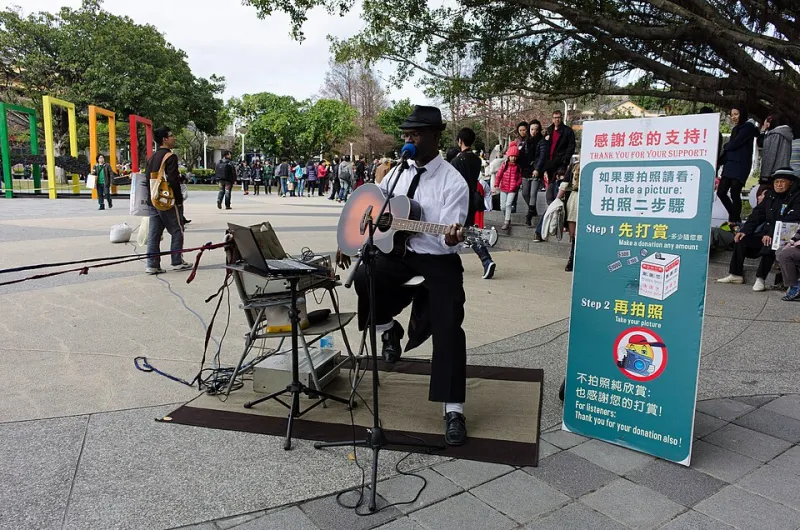
Photo: Ursulacas, CC BY-SA 4.0, via Wikimedia Commons
The Tell-Tell Touch: How to Spot and Use a Session Musician's Signature Style in Your Productions
Listen carefully to almost any well-produced UK record from the past fifty years, and somewhere buried in the arrangement you'll find it — a tiny idiosyncrasy that doesn't quite belong to the song itself, but belongs entirely to the person playing it. A guitarist who leans into the pick attack on upstrokes. A bassist who lets notes bloom just a fraction longer than the chart suggests. A drummer whose hi-hat sits consistently a hair behind the snare in a way that somehow makes the whole groove breathe.
These aren't mistakes. They're signatures. And learning to recognise and work with them — rather than trying to sand them down in the edit — is one of the things that separates a recording that feels alive from one that feels like a diagram of a song.
Why Session Musicians Develop Quirks in the First Place
A working session musician in the UK typically comes up through a combination of formal training, live performance, and sheer accumulated mileage across dozens of different studios, producers, and genres. Over time, the technically 'correct' approach to any given situation gets filtered through personal experience, physical habit, and the specific gear they've used most.
A guitarist who spent years playing through a particular vintage amp develops a way of picking that compensates for how that amp responds — and that physical habit sticks even when the amp changes. A drummer who started out in jazz before moving into session work carries a looseness in their time feel that gives pop records an organic quality no drum machine can replicate. These things aren't taught deliberately; they accumulate.
Ben Hartley, a session guitarist based in Manchester who's played on records ranging from indie to orchestral pop, describes it this way: "I've got a thing where I naturally mute with my palm more than most players. I didn't decide to do it — it came from years of playing in live rooms where the low strings would just feed back if you let them ring. Now it's just part of how I play, and producers either love it or they ask me to open up. Either way, it's a conversation worth having."
Recognising the Signature Before You Start Recording
The best time to identify what a session player brings to the table is before they've played a single note on your project. Ask them to send you a few examples of recent work — not necessarily in your genre, but enough to hear how they approach different material. Listen for the things that persist across different contexts: the consistent tonal choices, the rhythmic tendencies, the way they fill space or leave it.
If you're working with a drummer, pay particular attention to their snare tuning preferences and how they use dynamics. Some players naturally gravitate toward a tight, high-tuned snare that cuts through dense arrangements; others favour a looser, woodier sound that sits back in the mix. Neither is universally better, but knowing which way a player leans before they set up in your studio means you can position microphones, choose rooms, and plan your arrangement around what they'll actually deliver — not an imagined ideal version.
For string and wind players, listen for vibrato width and timing. Vibrato is one of the most personal elements of any instrumentalist's playing, and it's almost impossible to fake convincingly. A session violinist with a wide, slow vibrato is going to give your strings a very different emotional quality than one with a tight, fast vibrato — and that difference will define the character of the entire arrangement.
Making Space in the Arrangement for the Signature
Once you've identified what makes a player distinctive, the production decision becomes: where does this quality serve the song, and where does it need to be managed?
This isn't about restricting a musician's natural instincts across the board. It's about being intentional. If a bassist has a tendency to add subtle ghost notes between the main groove, decide early whether those ghost notes are going to be a feature or a complication. If they're a feature, build space around them in the arrangement — don't bury them under layers of synth pads. If they're a complication in a particular section, have a direct conversation about it rather than trying to fix it in the edit.
Sophie Adeyemi, a session bassist from London who regularly works on both live sessions and remote productions, puts it plainly: "The producers I enjoy working with most are the ones who've actually listened to what I do before they brief me. They'll say something like, 'we love how you use the octave slides — there's a breakdown at two minutes where we want that to be the main thing.' That tells me they've done their homework, and it means I can give them exactly what they're after rather than guessing."
Communicating What You Need Without Flattening What They Bring
Briefing a session musician is a skill that develops with practice, and it's worth thinking carefully about the language you use. Describing what you want in terms of feel and reference rather than rigid technical instruction tends to produce better results — and it leaves room for the player's own instincts to contribute something you didn't know you needed.
There's a significant difference between saying "play this part exactly as written" and saying "this section should feel like the chorus is being held back, like it's about to burst open — here's a reference track for the energy I'm after." The second approach gives the musician something to aim at emotionally, which is where their natural tendencies will kick in most usefully.
When something in a take genuinely doesn't work, be specific rather than vague. "That felt a bit busy" is less useful than "the fill going into the chorus is competing with the vocal melody — could we try something simpler there?" Session players are professionals; they respond well to clear feedback and they appreciate being treated as collaborators rather than instruments to be programmed.
Recording the Signature, Not Just the Part
From a purely technical standpoint, capturing a session musician's signature means making mic placement and signal chain decisions that preserve the qualities that make their playing distinctive rather than averaging them out.
If a guitarist's tone is defined by the way their pick attack blooms — that initial transient followed by a warm sustain — you want a microphone that captures transient detail without hardening it. A large-diaphragm condenser positioned slightly off-axis from the speaker cone will usually do this better than a dynamic mic planted directly in front of it. If a drummer's signature is in the subtlety of their ghost notes and brush work, room microphones become as important as close mics.
The goal, always, is to make the recording sound like the best possible version of what the player actually does — not a corrected or sanitised version of it. The quirks are the point. They're what make a record feel like it was made by human beings who cared about what they were doing.
And in a world where perfectly quantised, pitch-corrected recordings are increasingly the norm, that humanity is exactly what makes listeners lean in.