Wired Different: What Makes the British Recording Sound So Unmistakably British

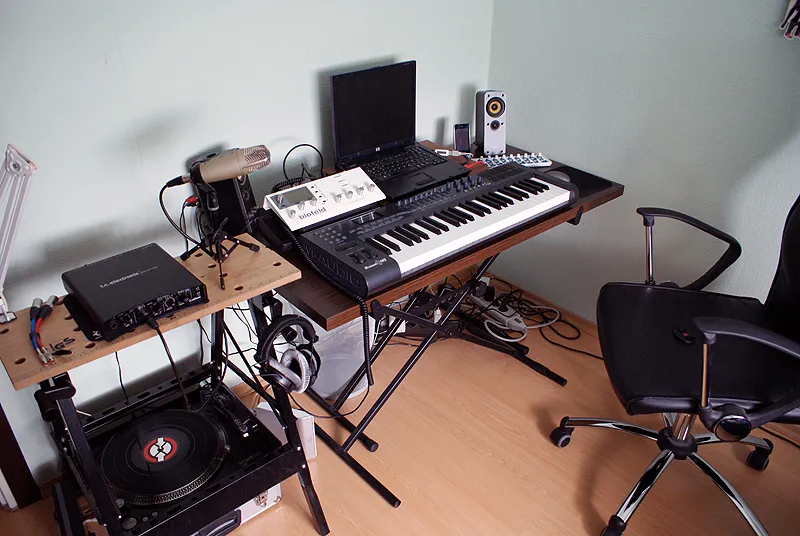
Photo: May Rivers, Public domain, via Wikimedia Commons
There's a moment in a lot of classic British records where everything just sits right. The drums feel roomy but controlled, the vocals sit slightly back in the mix rather than screaming for attention, and there's a warmth to the low-mids that feels almost like a cup of tea in sonic form. It's not always easy to describe, but most engineers who've spent time studying records made in this country will tell you — there's definitely something there.
So what is it, exactly? And more importantly, if you're an aspiring engineer or producer working out of a home studio in Leeds or London or somewhere in between, how do you connect with that tradition while still finding your own voice?
Let's have a proper look.
The Abbey Road Effect (And Why It's About More Than One Studio)
You can't talk about British recording without mentioning Abbey Road. It's almost cliché at this point, but the influence that studio — and EMI's in-house engineering culture more broadly — has had on how UK producers think about sound is enormous. The custom-built desks, the preference for natural reverb over heavy processing, the discipline of capturing a performance rather than fixing it in the box — these ideas filtered outward from St John's Wood and shaped a generation of engineers across the country.
But here's the thing: the British sound isn't just Abbey Road. It's Rockfield in Wales, where Queen tracked some of their most ambitious material. It's Maida Vale, RAK, Trident, Real World. It's a network of studios with distinct personalities that collectively built an approach to recording that values the room, values the performance, and treats the desk as a musical instrument in itself.
For home producers, the lesson isn't to try and replicate a £10,000-per-day studio. It's to understand the philosophy those spaces embodied — and find ways to apply it on a smaller scale.
Gear Choices and the British Preference for Colour
If you look at the signal chains that defined British records from the 1960s through to the 1990s, one thing stands out: UK engineers have historically favoured equipment with character. Neve consoles, EMI TG desks, Chandler gear, vintage Neve 1073 preamps — these aren't neutral tools. They add something. A certain harmonic density, a particular way of handling transients.
This is arguably the opposite of the clean, surgical approach that became popular in certain American studios during the same period. British engineers often wanted the desk to be part of the sound, not just a transparent conduit for it.
For today's home recordists, this translates into some genuinely useful guidance. If you're choosing between a completely transparent interface preamp and something with a bit more character — a hardware preamp, a transformer-coupled option, even a well-modelled plugin — consider what the British tradition would suggest. A little colour isn't a flaw. It can be the thing that makes your recordings feel alive rather than clinical.
The Room as an Instrument
Another thread that runs through British recording history is a real respect for acoustic space. UK engineers were famously creative with room mics — placing them at unusual distances, blending them subtly into the mix to give drums and live instruments a sense of three-dimensional space without making everything sound like it was recorded in a cathedral.
For home producers, this is both a challenge and an opportunity. Most of us aren't working in rooms with 30-foot ceilings. But experimenting with room mics — even in a treated bedroom studio — can yield surprising results. A mic placed at the back of your recording space, blended low under a close-mic'd drum kit or guitar amp, adds a sense of physical reality that no plugin reverb quite replicates.
It's worth spending time understanding your room's acoustic character rather than just fighting against it. That slightly boxy quality your room has? With the right mic placement and a bit of blending, it might actually become a feature.
Restraint, Dynamics, and the Art of Leaving Space
One of the subtler qualities in a lot of classic British recordings is restraint. There's a tendency — particularly in the mixing philosophy — to not push everything to the front. Vocals sit in the track rather than hovering above it. Instruments are allowed to breathe. Dynamic range is treated as a creative tool rather than something to be eliminated.
This contrasts with certain trends in modern commercial production, where hyper-compression and maximised loudness have become defaults. The British tradition tends to trust the listener a bit more — to give them space to lean into the music rather than having it shout in their face.
For engineers learning their craft, this is worth taking seriously. Before you reach for the limiter, ask whether the track actually needs more loudness, or whether a little more dynamic range might make it feel more alive. It's a question that British producers have been asking for decades.
Finding Your Own British Voice
Here's the honest truth: you don't need to be working at a historic London studio to connect with this tradition. The British recording sound was never really about postcodes. It was about an attitude — curious, craft-focused, willing to experiment, and deeply respectful of the performance at the heart of the record.
If you're developing your skills as a home recordist, that attitude is completely available to you. Study the records. Listen to how the drums sit in a Kinks track versus a contemporary American release from the same era. Notice how vocals are treated on classic Britpop records. Pay attention to the way room sound is used on early Radiohead albums.
Then bring those observations into your sessions. Try things. Be willing to make records that have a bit of grit and character rather than chasing the perfectly polished, genre-neutral sound that's everywhere right now.
The British recording tradition is alive and well — and it's not locked away in a famous studio in north London. It's in the approach you bring to every session, wherever you happen to be working.